This lesson was generously gifted to us by Sarah Spencer, and adapted with permission to complement the rest of this course.
🎯 Learning Outcomes
By the end of this lesson, you will be able to:
-
Explain why Nature is a relevant and practical co-facilitator for session work
-
Describe the key characteristics of healthy ecosystems and what they suggest about how groups function
-
Identify at least three living-systems frameworks and what each one offers a facilitator
-
Apply the concept of edge effects to facilitation situations involving uncertainty or tension
🏃🏿 The Warm-Up: Understanding Living Systems
Like Nature, our bodies are ecosystems. Intricate networks of interconnected systems that depend on one another to function. We are made up of trillions of human cells and even more non-human ones (microorganisms), all working together to sustain a healthy, functional system that keeps us alive.
Simply put, we are Nature. As our greatest teacher, Nature shows us how to navigate the world. With around 4 billion years of experience solving complex problems, Nature offers invaluable lessons on what true success looks like.
One of the core skills of a regenerative facilitator is learning to think like Nature and think as Nature.
📼 Activity: Watch this TEDx Talk
Dr Lyla June is a Diné musician, scholar and historical ecologist. She describes what we mean we say ‘we are Nature’, and shares stories about how her People collaborate with Nature.
🗣️ Contribute to the conversation: What resonated with you from what Dr June shared? Add your thoughts to the comments.
Think about all the different Earth systems for a moment.
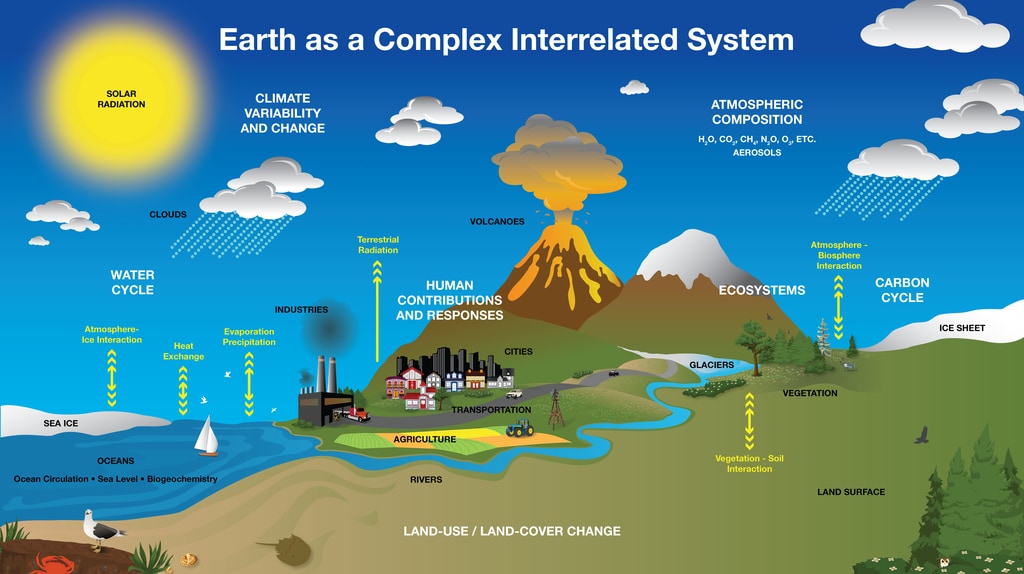
Every human system—whether an organisation, community, society, or economy—functions as a living system. These systems are constantly changing and adapting in response to influences both from inside and from their broader environment.
For example, a team’s culture evolves through the interactions of its members while also being shaped by wider organisational or societal shifts. Importantly, these human systems exist within larger, nested Earth systems. This means that actions within our organisations and communities can affect the planet, and changes in Earth’s systems can, in turn, impact economies, society and organisations.
By understanding these relationships helps us move beyond the engrained way of thinking about and viewing organisations as machines with parts to fix or control. Instead, we can support the natural flow and emergence of the groups we’re guiding. By aligning our facilitation with the way living systems operate, we usefully create the conditions for people, teams, and communities to flourish.
In the following sections, we will explore the key principles of living-systems thinking and introduce frameworks you can use in your facilitation practice.
✍️ Activity: If you haven’t already, download the accompanying worksheet and begin by completing section 1 of the ‘My Nature Co-Facilitation Practice’.
🧠 The Practice: Activating Core Concepts
This section moves us on from the regenerative thinking principles from lesson 1 and brings in a perspective from Nature.
“For all the challenges we face, Nature has solutions.”
— Janine Benyus, Biomimicry Institute
2.1 Thriving in Complexity
A living-systems approach embraces the inherent unpredictability of life. Change is constant and the future is uncertain. Rather than working against this, regenerative facilitators help groups work with it.
This means moving away from rigid control, fixed outcomes and predefined goals. In their place, you build the capacity for adaptability, creativity and resilience. Groups that develop these qualities are better equipped to navigate change than those that seek to plan their way around it.
Building this capacity requires two things in parallel:
1. New skills for reading and responding to what a group needs in the moment
2. A shift in mindset away from control toward curiosity
Neither one works without the other.
2.2 Edge Effects
In ecology, an edge effect occurs at the boundary where two different ecosystems meet, such as where a forest gives way to grassland. These boundary zones are among the most biodiverse and productive in Nature. Species from both ecosystems overlap, resources mix, and conditions shift. That richness comes precisely because the environment is neither one thing nor the other.
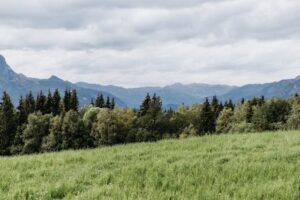
These zones also carry risk. Species must navigate competing needs and unfamiliar conditions. The same dynamic that generates diversity and innovation also generates tension.
As a facilitator, you will regularly work at equivalent boundaries. A group moving into unfamiliar territory, a conversation that crosses departmental lines, a session where established assumptions are being challenged. These are edge zones. They are uncomfortable by nature, and productive for exactly the same reason.
Your role at these edges is not to smooth the tension away but to help the group stay in it long enough for something useful to emerge. That means encouraging experimentation, making it safe to try things that might not work, and helping people move beyond the familiar without losing their footing entirely.
2.3 Deep Nature-Connection
Learning from living systems focuses on understanding and applying Nature’s design principles to human contexts.
Deep Nature-connection goes further. It cultivates an experiential and emotional relationship with the natural world. One that engages the senses, emotions and intuition rather than the intellect alone.
While an intellectual knowledge of how ecosystems work is useful. A felt sense of belonging to the natural world changes how you show up, what you notice, and what becomes possible in the room.
Spending time in Nature develops specific capacities that are required to become a great facilitator.
|
Benefit |
What it develops |
|
Reduced stress and mental fatigue |
The clarity needed for deeper listening and presence |
|
Awe and perspective shift |
The ability to move beyond self-centric views and see the bigger picture |
|
Embodied learning |
Sensory and emotional intelligence that intellectual approaches alone do not develop |
|
Ecological belonging |
A felt sense of being part of a larger system, not separate from it |
You can create opportunities for this kind of connection in two ways:
1. Where possible, take sessions outdoors. Natural settings reduce hierarchy, open dialogue and give participants direct access to the principles you are discussing.
2. Where that is not possible, bring Nature in. Leaves, branches, water, soil and other natural materials can shift the atmosphere of an indoor space and prompt a different quality of attention.
2.4 Nature as Co-facilitator
Most outdoor workshops treat nature as a backdrop; a pleasant setting or a change of scene. This section proposes a different approach: that Nature can actively participate in the facilitation process.
When you take a group outdoors you’re not just changing the space. You’re inviting Nature itself to participate, showing the group diversity, adaptation, interdependence, and cycles of growth and decay in action.
Participants can observe these principles directly instead of just hearing about them.
Three key possibilities arise that are harder to achieve indoors:
|
What Nature makes possible |
Why it matters in facilitation |
|
Observing principles in action |
Participants see resilience, adaptation and interdependence in action, rather than receiving them as abstractions |
|
Dialogue without hierarchy |
Natural settings reduce the social cues that reinforce status and authority, allowing conversations to move more freely |
|
Working without central control |
Nature demonstrates complex, functional systems with no single directing force — a useful provocation for groups used to top-down decision-making |
When you co-facilitate with Nature this way, your job is to guide rather than instruct. You move from translator to enabler. That means creating space for participants to observe and draw their own conclusions, helping them translate what they notice into something applicable to their own circumstances, and encouraging them to see the natural world as a collaborator rather than a resource.
2.5 An Introduction to Living-Systems Frameworks
To understand and work effectively with complex, interconnected systems, we can turn to living-systems frameworks. These frameworks are collections of principles drawn from careful observation of natural systems. They describe the key characteristics of healthy, functioning ecosystems and offer ways to apply those characteristics to human contexts.
Because living systems are inherently complex and diverse, no single framework can capture all their nuances. This lack of universal agreement reflects a core principle of living-systems thinking: Life cannot be reduced to one model that fits every circumstance. Instead, different frameworks have emerged to serve various contexts and audiences.
Each framework is designed as a cohesive whole, reflecting the interconnectedness of system characteristics. Selecting individual principles in isolation risks falling back into the reductionism these frameworks were created to move beyond.
Importantly, these frameworks also draw deeply from Indigenous and ancient wisdom traditions, like the ones Lyla June shared in the video. They acknowledge the value of time-tested knowledge about living systems and build on the knowledge systems you will explore in the next lesson.
To bring these ideas to life, here are four living-systems frameworks selected by Sara Spencer that offer practical and accessible ways to apply regenerative thinking across different scenarios. Each framework highlights unique perspectives and tools, from designing sustainable communities to fostering regenerative leadership and economics.
While these provide a solid starting point, many other frameworks exist to explore and deepen your understanding.
🌱 Permaculture Principles
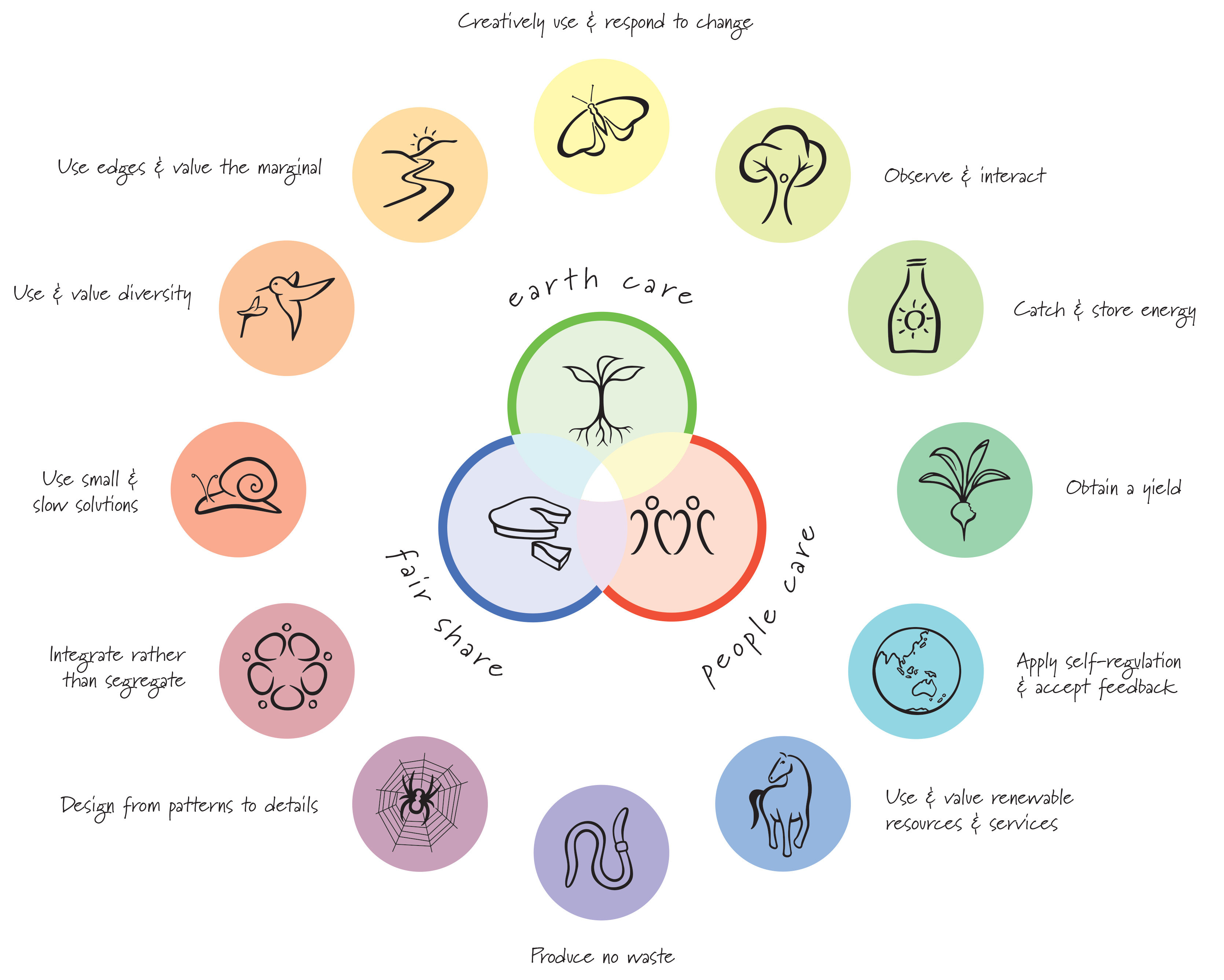
Originally developed by David Holmgren and Bill Mollison to design productive food systems, permaculture has expanded well beyond agriculture. Holmgren’s twelve principles offer practical guidance for designing communities, organisations and social structures that care for both people and planet.
🦋 Biomimicry (Janine Benyus / Biomimicry Institute)
Biomimicry studies and mimics strategies used by living organisms to address human challenges. This approach recognises that Nature has developed solutions far more harmonious with the rest of the natural world than many human-designed strategies, aiming to create products, processes, and systems that solve design challenges sustainably.
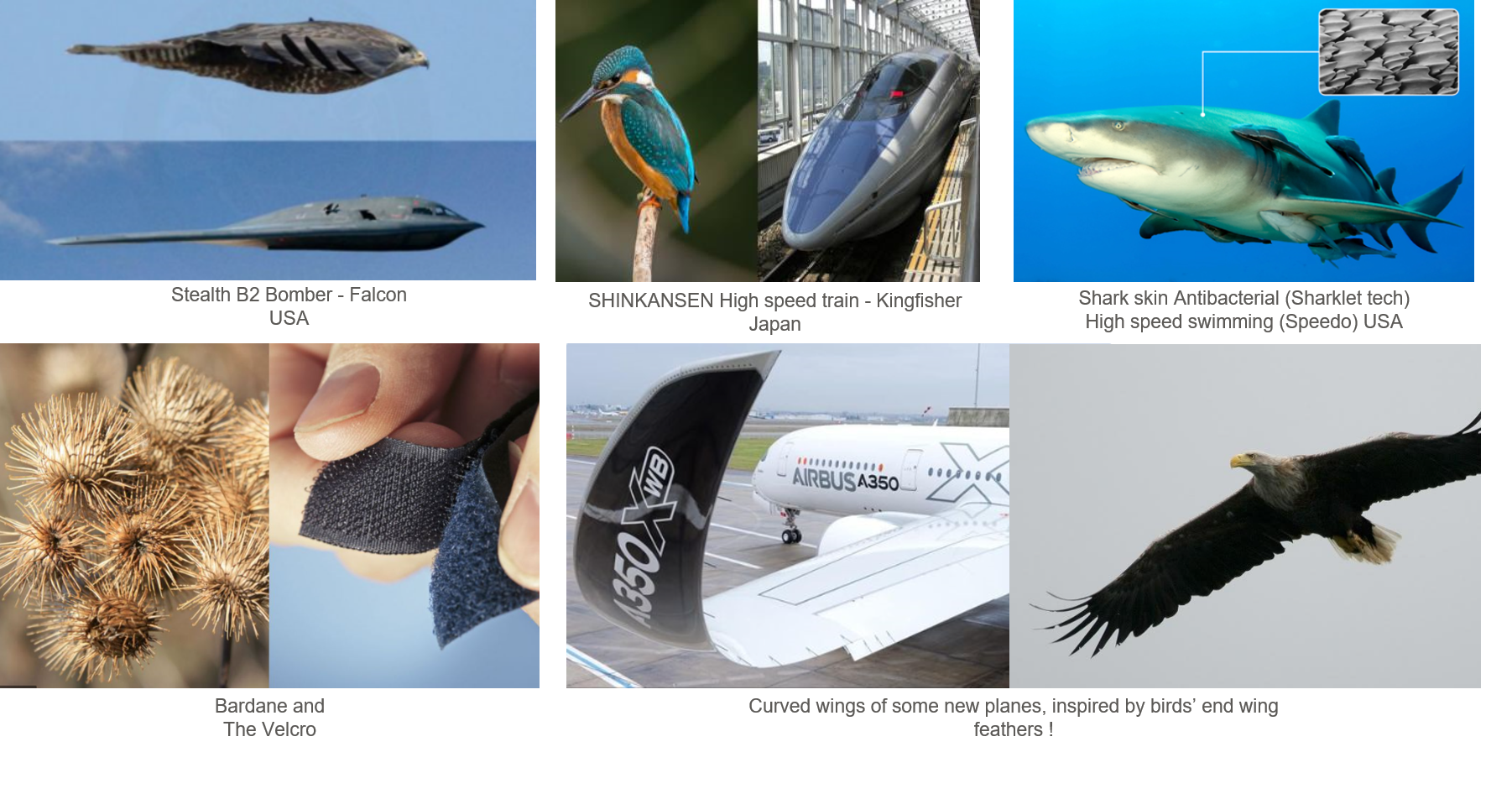
While permaculture and biomimicry focus on design inspired by natural systems, the following frameworks bring regenerative thinking into personal development, leadership, and economics.
🌳 Think Like A Tree Natural Principles (Sarah Spencer)
Bringing together principles from permaculture and other regenerative practices this set principles in six groups (Observation, Purpose, Surroundings, Connection, Resilience and Future) was developed for personal development contexts and feature in the book Think like a Tree: the natural principles guide to life.

🌳 Think Like A Forest 12 Regenerative Strands Framework (Sarah Spencer)
Inspired by various regenerative practices including permaculture, this framework was developed specifically for leadership and business contexts. Each Strand applies to multiple systems within organisations. From personal leadership and team culture to organisational systems and relationships with Earth’s systems like climate, water and biodiversity.
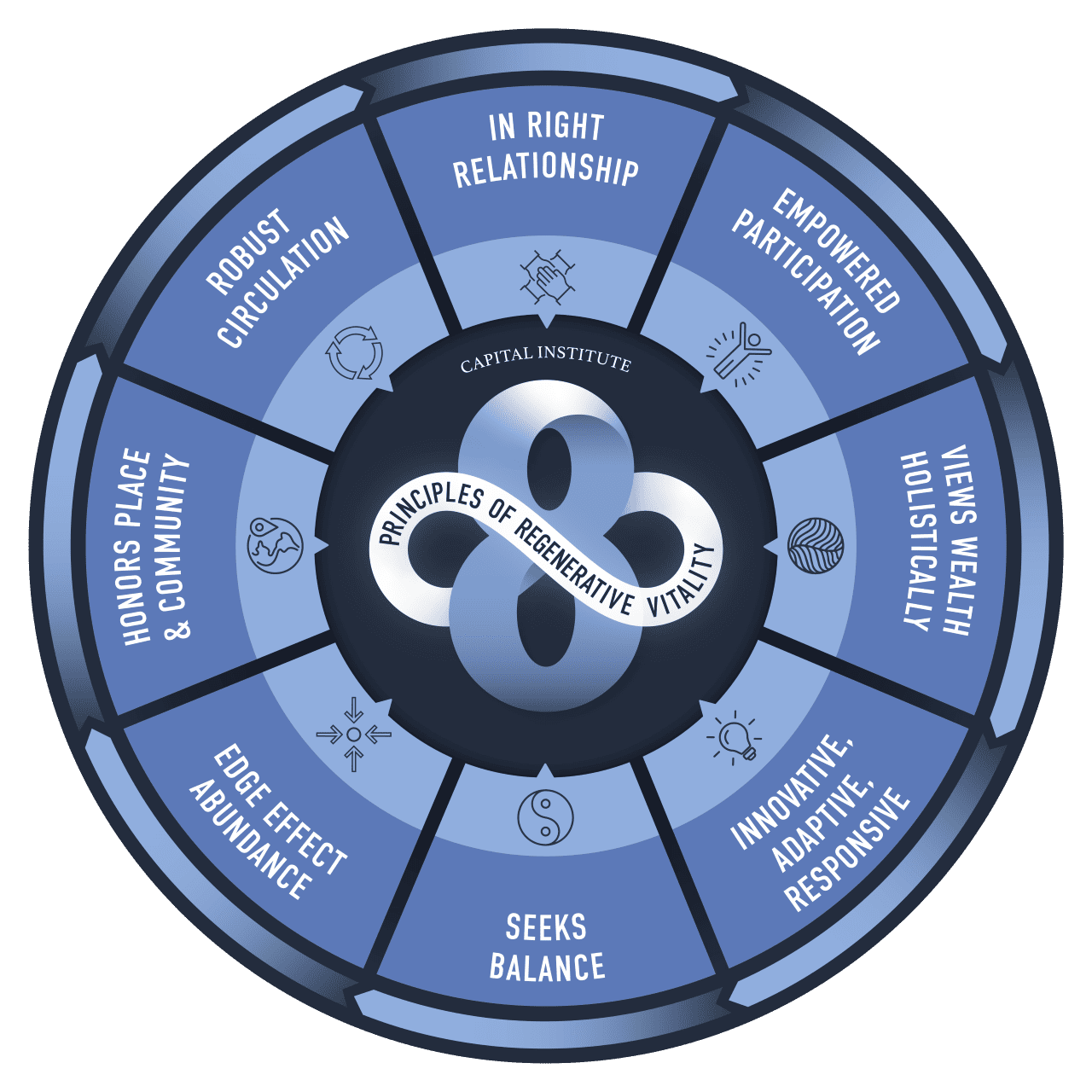
💫 8 Principles of Regenerative Vitality (John Fullerton, Capital Institute)
This framework applies living-systems principles specifically to economic systems, guiding the development of regenerative economies that promote long-term health and resilience while aligning economic activities with the wellbeing of both people and planet.
🧘🏽 Cool-Down: Key Takeaways
-
Nature has roughly 4 billion years of successful evolution we can actively learn from and apply to human settings.
-
Working at the edges of complexity, where uncertainty and tension meet, is where the most useful learning tends to happen.
-
Intellectual knowledge of living systems tells you how Nature works. But deep Nature-connection changes how you listen, how you hold complexity, and what you notice.
-
Thinking like Nature and thinking as Nature, will make you a better facilitator as you support teams to move from mechanistic-thinking into human and eco-centric problem solving.
👣 Next Steps
Reflect: If you have spent time being in Nature recently, use the prompts in Parts 2, 3, and 4 of the worksheet to consider what Nature has taught you. If it has been a while since you connected with Nature, set aside time to do so and complete the rest of the worksheet before you start the next lesson.
Share: Add a couple of key observations to the Miro Community Garden board.
⏭️ Up next: Lesson 3 introduces Indigenous Knowledge Systems from around the world, building on some of the things Lyla June shared in her Ted Talk.
